How to Find the Original Price After a Discount
Learn how to find the original price from a sale price using the reverse discount formula with step by step examples for 10 percent, 20 percent, and 50 percent off.
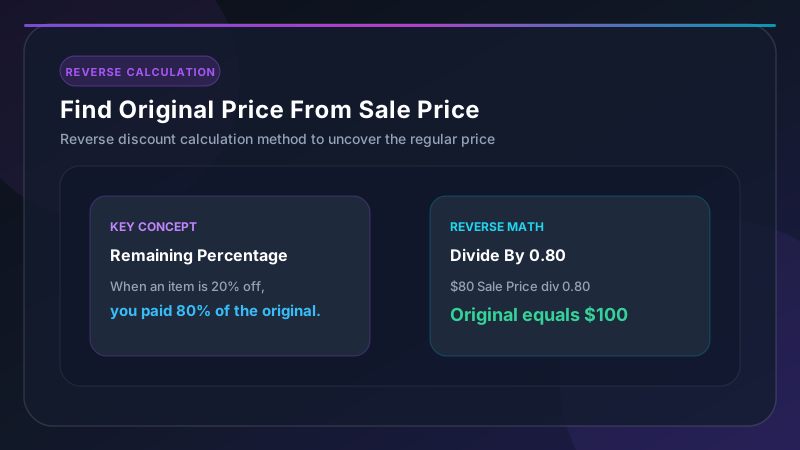
A sale price can hide an important question: what did the item cost before the discount? Reverse calculations help uncover the price before discount when the reduced price and discount rate are already known.
What Is the Original Price?
The original price is the amount charged before any markdown, coupon, or promotional reduction. It provides the starting point for calculating both the discount and the final cost.
What Is a Discounted Price?
A discounted price is the amount remaining after a percentage or fixed reduction. If a $100 product receives 20% off, its discounted price is $80.
Can You Find the Original Price From a Sale Price?
Yes. You can work backward when you know the sale price and discount percentage. The key is recognizing what percentage of the original price remains after the discount.
The Reverse Discount Formula Explained
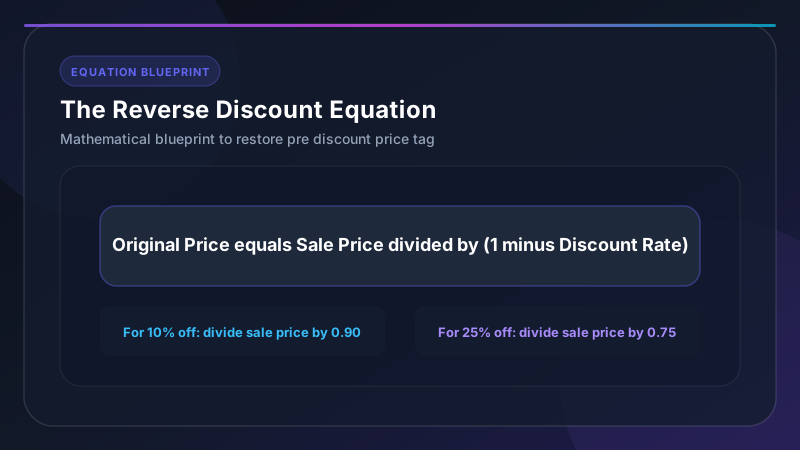
The reverse discount formula is:
Original Price = Sale Price ÷ (1 − Discount Rate)
For 20% off, divide the sale price by 0.80. If the sale price is $80, the original cost was $100.
How to Find the Original Price After 10% Off
After 10% off, 90% of the original price remains. Therefore, divide the sale price by 0.90. A $72 sale price gives an original cost of $80.
How to Find the Original Price After 20% Off
After a 20% reduction, you pay 80% of the original amount. If a product costs $120 after the sale, divide $120 by 0.80. The price before sale was $150.
How to Find the Original Price After 50% Off
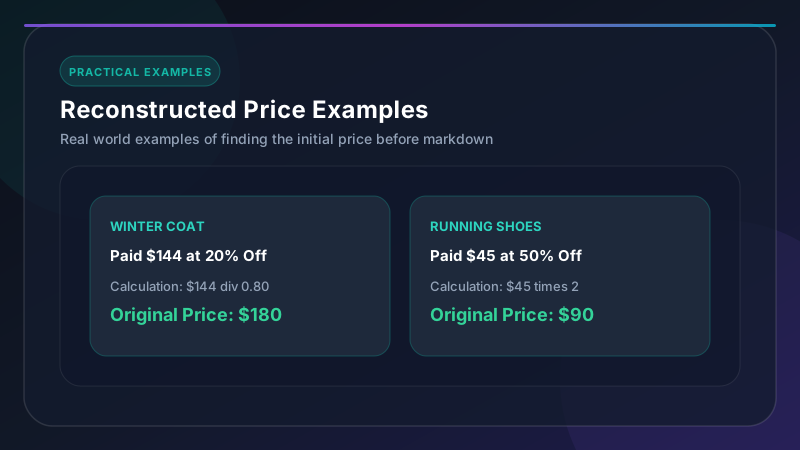
A 50% discount leaves exactly half of the original price. Therefore, double the sale price. A $45 discounted item originally cost $90.
Reverse Discount Examples
Suppose a retailer lists a coat for $144 after a 20% promotion. Because the shopper pays 80%, divide $144 by 0.80. The result is $180. That is the regular price before the reduction.
Common Original Price Calculation Mistakes
The biggest mistake involves subtracting the discount percentage from the sale price. That reverses the process incorrectly. Another mistake involves dividing by the discount itself instead of the percentage remaining after the reduction.
Use a Reverse Discount Calculator
An original price calculator can simplify this process. Enter the sale price and discount rate to determine the starting price. A reverse discount calculator is particularly helpful when checking receipts, advertisements, or historical sale prices.
Remember that a displayed sale price may reflect several promotions. When that happens, identify exactly which discount produced the listed amount before performing a reverse calculation.
Conclusion
Finding the original price after a discount becomes simple once you understand the reverse discount formula. Instead of subtracting the discount again, divide the sale price by the percentage that remains after the discount. This method works for 10%, 20%, 50%, and other discounts, making it useful whenever you need to find the original price from a discounted amount.