How to Calculate Discount and Sales Tax on a Sale Price
Discover how to calculate store discounts and applicable sales tax in the correct order to estimate your accurate final checkout price.
A sale sticker rarely tells the entire checkout story. In the United States, applicable sales tax can increase the amount you finally pay. Calculating the discount first gives a clearer estimate of your actual purchase cost.
Should You Apply the Discount Before Sales Tax?
For ordinary retail purchases, calculate the discount before tax. First reduce the original price. Then apply the applicable sales tax to the reduced taxable amount. Local rules and special promotions can vary.

How to Calculate a Discounted Price
Multiply the original price by the discount rate. A $200 item with 20% off saves $40. Subtract that amount from $200 to get a discounted price of $160.
How to Calculate Sales Tax on a Discounted Price
Once you know the discounted price, multiply it by the applicable sales tax rate. If the taxable price is $160 and the rate is 8%, tax equals $12.80.
Discount and Tax Formula
The basic process is:
Discounted Price = Original Price × (1 − Discount Rate)
Then:
Tax = Discounted Price × Tax Rate
Finally, add the tax to obtain the final price after tax.
Example: 20% Off Plus Sales Tax
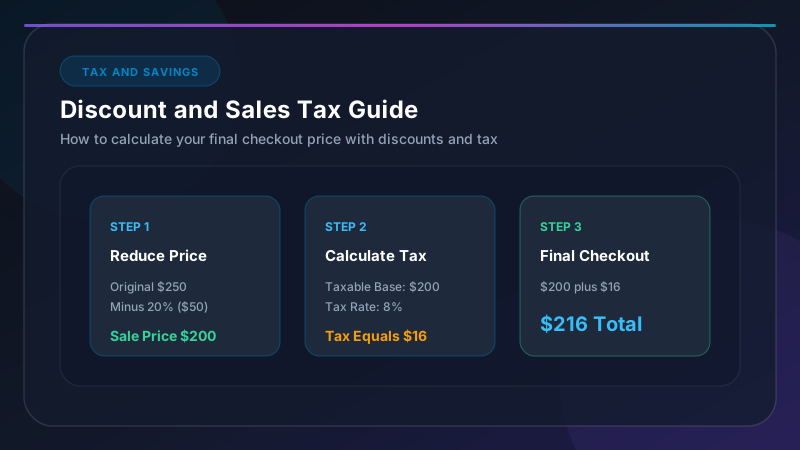
Imagine a $250 purchase with 20% off and an 8% tax rate. The discount saves $50, leaving $200. Tax equals $16. The total checkout price becomes $216.
How Tax Changes the Final Purchase Price
Tax does not erase the discount. Instead, it adds a separate charge after the taxable amount is established. A large discount amount can therefore remain valuable even after tax increases the total.
Pre Tax Price vs Final Price
The pre tax price is the amount after discounts but before tax. The final checkout amount includes applicable tax and potentially shipping or other charges. Keeping these figures separate makes price comparisons easier.

How to Calculate Tax on Multiple Items
Calculate each item’s discounted price first when different promotions apply. Then determine the taxable subtotal according to applicable rules. A sales tax calculator can help when several prices and rates are involved.
Common Discount and Tax Mistakes
A common error involves applying tax to the original price when the promotion reduces the taxable amount. Another mistake involves using the wrong local tax rate. U.S. sales tax rules differ by state and locality.
Calculate Your Final Checkout Price
A discount tax calculator can combine the discount and tax steps. Enter the purchase price, discount percentage, and applicable tax rate to estimate the total cost before completing checkout.
For exact purchases, retailer terms and local tax rules remain important. The advertised sale price should therefore be treated as a starting point rather than the complete checkout total.
Conclusion
Calculating a discount and sales tax separately gives you a clearer picture of your final purchase cost. Start by reducing the original price, then apply the appropriate sales tax to the discounted amount. This approach helps you estimate your final price after tax more accurately and avoid surprises when the total appears at checkout.